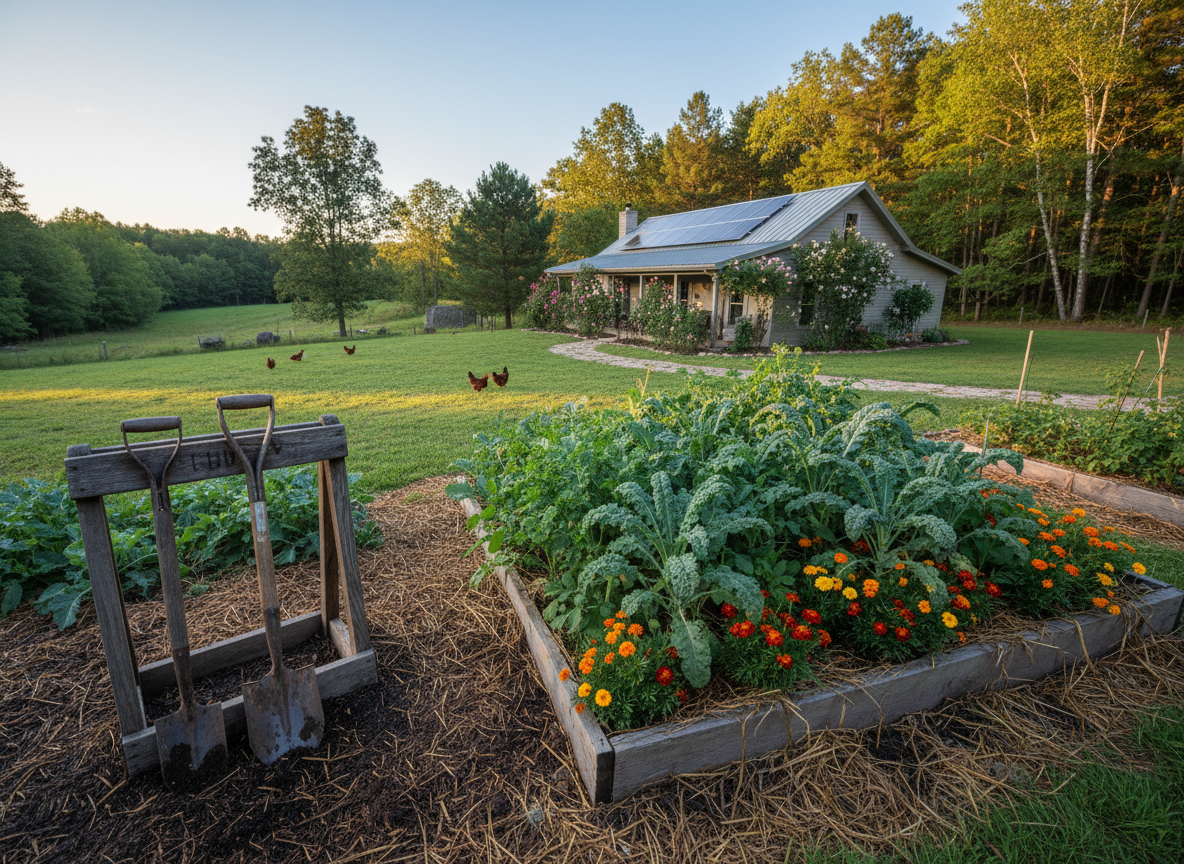
A resilient homestead isn't about preparing for every possible disaster. It's about building systems that keep working when something goes wrong. Whether you're dealing with a power outage, rising food costs, equipment failure, severe weather, or simply an unexpected expense, a few practical improvements can make your home and land far more self-reliant.
1. Build a Reliable Backup Water Supply
Water is one of the first systems to think about when building resilience. A well is excellent, but many wells depend on electricity to pump water. A power outage can quickly turn a reliable water source into an inaccessible one. Consider adding stored drinking water, rainwater collection, a backup pump, or another way to access water when the power is out. Even a modest backup supply can buy valuable time during an emergency.
2. CREATE A BACKUP POWER PLAN
Electricity supports many of the systems we depend on every day, including refrigeration, lighting, communications, heating equipment, and water pumps. A generator is one option, but solar panels, battery storage, and smaller portable power stations can provide additional layers of protection. The goal isn't necessarily to power everything—it is to identify your most important electrical needs and make sure you have a way to keep them operating.
3. GROW SOME OF YOUR OWN FOOD
You don't need acres of gardens to become more food resilient. Start with a few crops your household actually eats and learn how to grow them successfully. Raised beds, containers, fruit trees, berries, herbs, and perennial crops can all contribute to your food supply. Each growing season teaches skills that become increasingly valuable over time.
4. LEARN TO PRESERVE FOOD
Growing food is only half the equation. Learning to store it extends the value of every harvest. Canning, freezing, dehydrating, fermenting, and proper dry storage can turn seasonal abundance into food that lasts for months or even years. Start with one preservation method, become comfortable with it, and expand from there.
5. KEEP BASIC TOOLS AND LEARN TO REPAIR THINGS
Self-reliance often comes down to being able to solve ordinary problems without immediately depending on someone else. A basic collection of hand tools, repair materials, spare parts, and maintenance supplies can handle a surprising number of problems. More important than owning every tool is developing the confidence and knowledge to diagnose a problem and make a safe repair when possible.
6. BUILD A DEEPER PANTRY
A resilient pantry doesn't require panic buying or enormous quantities of food. Simply begin keeping more of the foods your household already uses. Rice, beans, pasta, canned foods, flour, cooking oils, spices, and other shelf-stable staples can provide a buffer against storms, supply disruptions, unexpected expenses, or simply a week when getting to the store is inconvenient. Rotate what you store so nothing goes to waste.
7. DEVELOP SKILLS BEFORE YOU NEED THEM
Equipment and supplies are useful, but knowledge may be the most valuable resilience tool you can own. Gardening, first aid, cooking from basic ingredients, food preservation, animal care, mechanical repair, carpentry, electrical work, and emergency planning are all skills that become more useful with practice. Learn them when life is normal—not when an emergency forces you to figure them out.
A more resilient homestead isn't built in a weekend. It's built gradually, as you improve systems, learn new skills, and become less dependent on things outside your control. Start with what matters most to your household, make one improvement at a time, and keep building from there.